

CTS Dumps 2025 - New AVIXA CTS Exam Questions
Free CTS Braindumps Download Updated on Nov 04, 2025 with 256 Questions
NEW QUESTION # 83
Which section of the Ohm's Law chart would you use to calculate watts? Select the coned quadrant.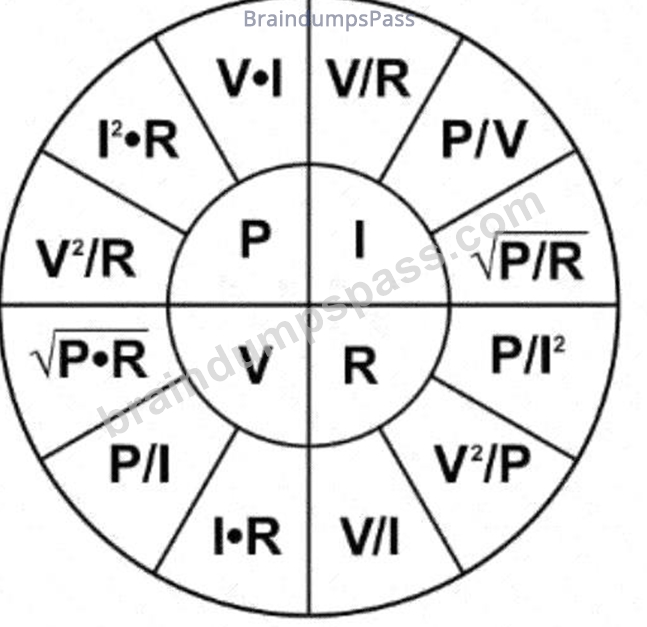
Answer:
Explanation: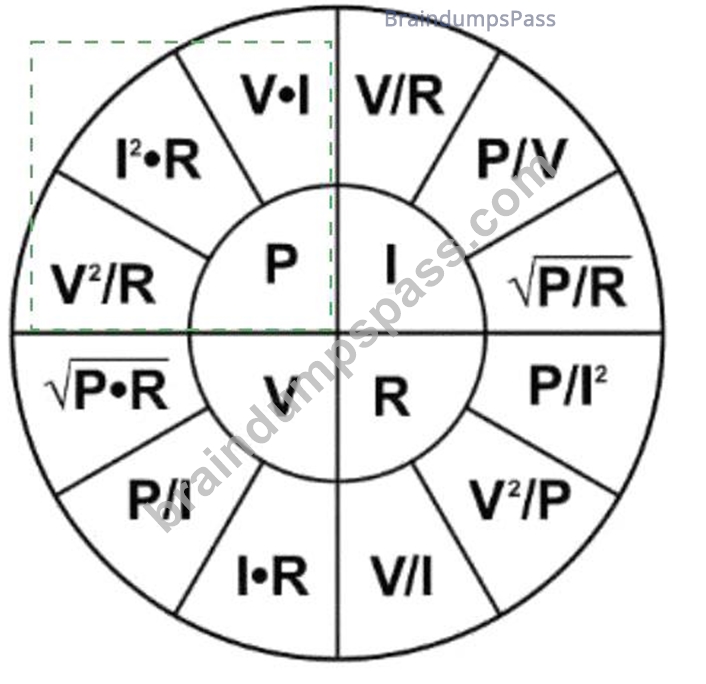
Explanation:
To calculate watts (P) using the Ohm's Law chart, you would use the sections that involve power formulas.
These sections are:
* P = V * I
* P = I² * R
* P = V² / R
These formulas show the relationship between power (watts) and the other electrical quantities: voltage (V), current (I), and resistance (R).
NEW QUESTION # 84
Which microphone pattern is MOST susceptible to feedback? Select the correct pattern by clicking on it.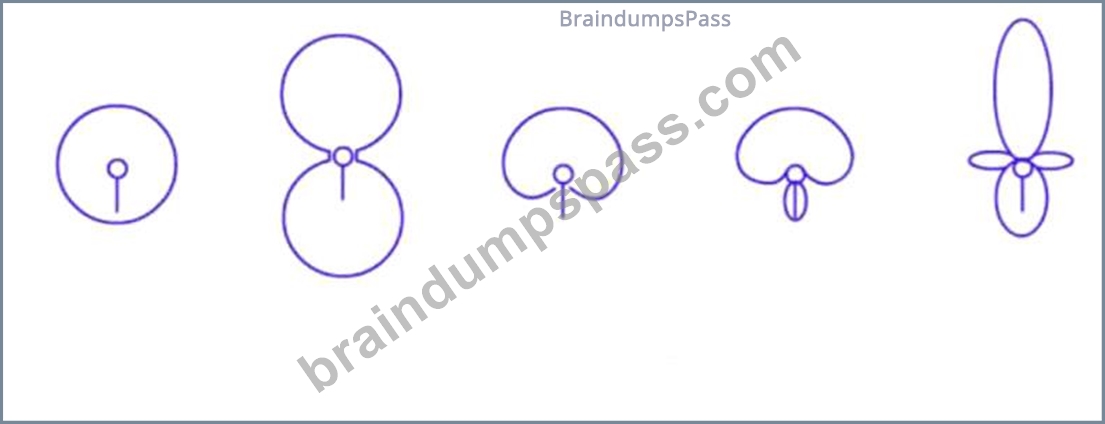
Answer:
Explanation: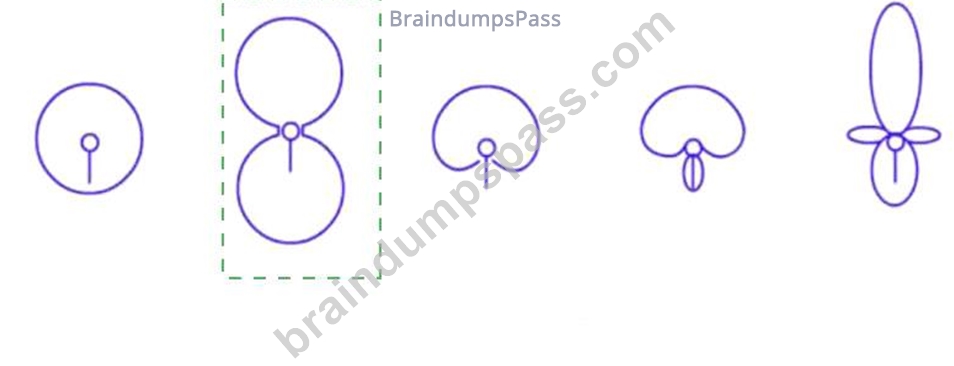
Explanation:
The second pattern from the left (the figure-eight pattern).
The figure-eight (or bidirectional) microphone pattern is the most susceptible to feedback among the choices shown. This pattern picks up sound equally from both the front and rear of the microphone while rejecting sound from the sides. Due to its large rear lobe, it is prone to capturing sounds from reflective surfaces or rear- facing speakers, which can lead to feedback in a live sound environment.
Here's a breakdown of the patterns:
* First pattern (Omnidirectional): Captures sound from all directions. While it can be prone to feedback, it doesn't have a rear lobe like the figure-eight pattern.
* Second pattern (Figure-eight/Bidirectional): Susceptible to feedback because it picks up equally from both front and back, which can include unwanted sound reflections.
* Third and Fourth patterns (Cardioid and Supercardioid): These are more directional with better rear rejection, thus less susceptible to feedback.
* Fifth pattern (Shotgun): Highly directional with minimal pickup from the rear and sides, making it the least susceptible to feedback.
CTS Technology Specialist ReferenceCTS materials on microphone types and placement emphasize that bidirectional (figure-eight) microphones should be positioned carefully in live sound setups to avoid unwanted rear lobe pickup, which can lead to feedback when speakers are positioned behind or to the sides of the microphone.
NEW QUESTION # 85
The purpose of the system performance verification process is to:
- A. Allow the AV contractor to send the final invoice for the project.
- B. Provide a means for the AV contractor to objectively demonstrate the AV system meets performance criteria.
- C. Conclude the installation phase and close out the project.
- D. Ensure the AV system meets substantial completion requirements.
Answer: B
Explanation:
According to the AVIXA AV System Performance Verification Standard, the system performance verification process is intended to "objectively demonstrate that an AV system performs in accordance with the project documentation and to the client's expectations." This step ensures that all subsystems are tested and that performance meets the pre-established metrics. It's not merely administrative; it ensures compliance and satisfaction.
Reference: AVIXA Standard - AV System Performance Verification (ANSI/INFOCOMM 10:2013)
NEW QUESTION # 86
If the nominal light output of a projector was measured at 5000 ANSI lumens using an f/1.4 lens, what would happen if the lens was changed to an f/2.8 large zoom?
- A. The screen will need to be changed to 1:1 gain
- B. The projected image will be darker
- C. The projected image will be brighter
- D. The screen will need to be changed to a high contrast screen
Answer: B
Explanation:
The f-number (aperture) of a lens determines how much light passes through. An f/2.8 lens allows less light than an f/1.4 lens, resulting in a dimmer image. Specifically, each full f-stop reduces the light by a factor of four. So switching from f/1.4 to f/2.8 cuts the light significantly.
"The larger the f-number, the smaller the lens opening and the less light is transmitted, which reduces image brightness."
- AVIXA CTS Exam Guide, Display Technologies Chapter
NEW QUESTION # 87
A client has ordered a large project from a company. This project has several critical components and a fixed schedule. Which of the following will be VITAL for ensuring that the company meets the deadlines?
- A. proper job costing
- B. confirming price changes
- C. confirming lead times
- D. qualifying the customer
Answer: C
Explanation:
For a project with several critical components and a fixed schedule, confirming lead times is vital. Lead times refer to the amount of time it takes for components to be delivered from the supplier to the project site. By confirming and managing lead times, the company can ensure that all necessary components arrive on time, preventing delays and enabling the project to proceed according to the planned schedule. This is essential for meeting deadlines and ensuring project success.
References:
* Axis Communications - Project Planning and Management
* Supply Chain and Logistics Best Practices
NEW QUESTION # 88
In the initial stage of determining AV equipment for an installation, the AV team gathers information PRIMARILY to:
- A. Understand the application
- B. Produce schematic drawings of the proposed solution
- C. Establish a baseline for system performance
- D. Prepare a punch (snag or defect) list
Answer: A
Explanation:
Before selecting equipment, it's essential to understand how the system will be used. This includes the application (e.g., video conferencing, digital signage, education) and user requirements. This insight drives all design and equipment decisions.
"Understanding the application allows the integrator to tailor the system design to user needs, functionality, and budget."
- CTS Exam Guide, AV Needs Analysis Chapter
NEW QUESTION # 89
When conducting an analysis of the customer's needs, the integrator should:
- A. Fill in missing information with the help of the end user
- B. Keep in mind vendor promotions
- C. Recommend future proof solutions
- D. Have a pre-visualized design in mind
Answer: A
Explanation:
During needs analysis, gaps in information often emerge. The correct method is to engage the client/end user to clarify or provide details, rather than make assumptions or pre-design solutions.
"The client is the primary source of information. The integrator must gather missing data through guided interviews and site observations."
- CTS Exam Guide, Needs Analysis Chapter
NEW QUESTION # 90
When training a new user to operate the solution that has been provided, how should the training be started?
- A. With the system shut down and at a state of rest.
- B. With the display up and running.
- C. With the system up and running.
- D. With a good joke.
Answer: A
NEW QUESTION # 91
There are a number of ways to attach a projector mount to a concrete ceiling. What is tire PRIMARY factor that must be considered when deciding which, if any, method is appropriate?
- A. the age of the concrete
- B. the condition of the concrete
- C. the tools that are available
- D. the space between the drop ceiling and the concrete
Answer: B
Explanation:
The primary factor that must be considered when deciding how to attach a projector mount to a concrete ceiling is the condition of the concrete. Ensuring that the concrete is in good condition and can support the weight and stress of the projector mount is essential for safety and stability. Axis Technology Specialist documentation emphasizes assessing the integrity of the mounting surface to prevent structural failures and ensure secure installation.
NEW QUESTION # 92
A new construction is underway and the walls are framed but not yet drywalled. What is the MOST ideal to check at this time?
- A. Proper sound system equalization
- B. Color matching for ceiling speakers
- C. Low voltage cabling pathways
- D. Projector alignment
Answer: C
Explanation:
This is the ideal stage for confirming and adjusting cable pathways, as conduit, wall boxes, and cable access are exposed. Once drywall goes up, rework becomes costly and labor-intensive.
"Pre-drywall inspection is the critical time to verify cable paths, conduit runs, and accessibility for future service."
- CTS Exam Guide, Installation Coordination and Site Readiness
NEW QUESTION # 93
A customer wants to reuse existing network cabling to extend audio and video signals in a system refresh.
What is the PRIMARY concern?
- A. cable condition
- B. cable color
- C. cable labeling
- D. cable connection
Answer: A
Explanation:
When reusing existing network cabling, the primary concern is cable condition, as it directly affects signal integrity and performance. Damaged or deteriorated cables can lead to transmission issues, especially for audio and video signals, which require reliable connectivity.
CTS Technology Specialist Reference
CTS materials emphasize inspecting cable conditions for any AV project, particularly when reusing existing infrastructure, to ensure the system will function as intended without signal degradation or reliability issues.
NEW QUESTION # 94
On a construction project awarded through a competitive process, the electrical contractor says that the AV company is responsible for the installation of conduit. What project document(s) would determine responsibility?
- A. submittals
- B. estimate
- C. proposal cover letter
- D. bid (tender) documents
Answer: D
Explanation:
The responsibility for the installation of conduit in a construction project is typically outlined in the bid (tender) documents. These documents detail the scope of work, responsibilities, and specifications agreed upon during the competitive bidding process. They serve as a binding agreement between the parties and clearly delineate who is responsible for various aspects of the project, including the installation of conduit.
NEW QUESTION # 95
Which connector is typically used for ease of termination for various signal types?
- A.

- B.

Answer: A
Explanation:
Connector A is a BNC (Bayonet Neill-Concelman) connector, which is commonly used for a variety of signal types, including video (such as composite and SDI), RF signals, and even some data signals. It is known for its ease of termination, with a simple twist-lock mechanism that ensures secure and quick connections. The BNC connector's versatility and reliability make it popular in professional AV environments.
* Connector B is a VGA (Video Graphics Array) connector, typically used for analog video signals, particularly between computers and monitors. However, VGA connectors are not typically associated with ease of termination due to their multiple pins and more complex soldering requirements compared to the quick-connect design of BNC connectors.
CTS Technology Specialist Reference
The CTS curriculum highlights BNC connectors as versatile and easy-to-use, suitable for a range of AV signal types. Their locking mechanism and straightforward assembly process make them a preferred choice for AV professionals needing quick and reliable connections across various applications.
NEW QUESTION # 96
Projectors utilizing laser phosphor technology might be favored for installation in inaccessible locations because:
- A. The light source is linear so less affected by ambient conditions.
- B. They are cheaper and easier to install.
- C. They fit in a smaller lighter package compared to lamped units.
- D. They require little maintenance and they generate less heat.
Answer: D
Explanation:
Laser phosphor projectors offer longer operational life and lower maintenance needs compared to lamp- based projectors. Because they don't require frequent lamp changes and generate less heat, they are ideal for hard-to-reach installations where routine maintenance would be difficult and costly.
Reference: CTS Certified Technology Specialist Exam Guide, Third Edition - Chapter on Display Technologies
NEW QUESTION # 97
A 2x2 video wall was sold with each display being Full HD resolution. Now the client wants to show live content at the best possible quality over the complete wall. Which resolution must the camera provide?
- A. 7680 x 4320
- B. 4096 x 2160
- C. 3840 x 2160
- D. 1920 x 1080
Answer: A
Explanation:
Each display in a 2x2 video wall setup at Full HD resolution (1920 x 1080) requires a total resolution of 3840 x 2160 for two displays horizontally and 2160 x 2 vertically, which equals 7680 x 4320. This resolution ensures each display shows content at the highest quality without scaling down.
CTS References: AVIXA CTS Exam Guide, Chapter on Video Walls and Resolutions; CTS Handbook, Section on Display Technologies and Scaling.
NEW QUESTION # 98
Signal flow on a schematic is conventionally shown in which direction?
- A. Left to right
- B. Top to bottom
- C. Right to left
- D. Bottom to top
Answer: A
Explanation:
In AV system schematics, signal flow is traditionally depicted from left to right. Inputs (sources) are placed on the left, and outputs (displays, speakers) are on the right. This makes signal tracing intuitive and consistent for documentation and troubleshooting.
"Standard AV system drawings depict signal flow from left to right, starting at source and ending at output, to provide logical signal tracing."
- CTS Exam Guide, Documentation and Schematics Chapter
NEW QUESTION # 99
Which of the following project management activities coordinates project requirements and resources?
- A. logic model timeline
- B. project kick-off meeting
- C. project budget
- D. logic network diagram
Answer: B
Explanation:
A project kick-off meeting is the project management activity that coordinates project requirements and resources. This meeting involves all stakeholders and team members to ensure everyone understands the project scope, objectives, timelines, and resource allocations. It sets the stage for the project execution and aligns the team on the plan ahead. According to Axis Technology Specialist documentation, project kick-off meetings are crucial for aligning expectations and ensuring all necessary resources are allocated effectively from the start.
NEW QUESTION # 100
Which viewing category describes the usage of a display as reference for CAD drawings?
- A. PV (Passive Viewing)
- B. ADM (Analytical Decision Making)
- C. BDM (Basic Decision Making)
- D. FMV (Full Motion Viewing)
Answer: B
Explanation:
The viewing category that describes the usage of a display as a reference for CAD drawings is ADM (Analytical Decision Making). This category involves the detailed examination and interpretation of complex information, such as technical drawings or data. Displays used for ADM must have high resolution and clarity to ensure accurate analysis. Axis Technology Specialist documentation categorizes displays for analytical decision-making tasks as requiring superior visual performance to support detailed and precise work.
NEW QUESTION # 101
The limits of the vertical visual field indicate that displays should be positioned where in relation to the viewers' standard line of sight?
- A. center of the image is at least 10 degrees above
- B. bottom of the image is no more than 30 degrees below
- C. top of the image is no more than 30 degrees above
- D. center of the image is precisely on-axis
Answer: C
Explanation:
For optimal viewing comfort, the top of a display should not be positioned more than 30 degrees above the viewer's line of sight. This guideline ensures that viewers do not have to strain their necks to see the entire screen. While Options A and B might seem reasonable, 30 degrees is considered the upper limit for comfortable viewing, with viewers ideally positioned to see the full display without needing to look up excessively.
CTS References: AVIXA CTS Exam Guide, Chapter on Display Mounting and Viewing Angles; CTS Handbook, Section on Ergonomic Viewing Considerations.
NEW QUESTION # 102
When planning to use audio equipment on a converged enterprise network, it may be desirable to separate broadcast domains in order to
- A. avoid crosstalk between multi track channel packets.
- B. avoid delaying time sensitive AV traffic on the network.
- C. comply with local electrical and telecommunication regulations.
- D. avoid audio feedback between devices.
Answer: B
Explanation:
When using audio equipment on a converged enterprise network, separating broadcast domains is essential to avoid delaying time-sensitive AV traffic. AV traffic, such as audio and video streams, requires low latency and minimal jitter to maintain quality. By segregating these streams from other types of network traffic, such as data and general communications, network performance can be optimized, ensuring that AV services operate smoothly without interruption.
References:
* Axis Communications - Network Design and AV Integration
* IT and Network Management Best Practices
NEW QUESTION # 103
According to AVIXA Standards, what is the MINIMUM load rating for truss that will hold a 5000 lbs (2268 kg) LED wall?
- A. 25000 lbs (11340 kg)
- B. 15000 lbs (6804 kg)
- C. 30000 lbs (13608 kg)
- D. 50000 lbs (22678 kg)
Answer: A
Explanation:
According to AVIXA standards, the minimum load rating for a truss that will hold a 5000 lbs (2268 kg) LED wall is typically calculated with a safety factor to ensure stability and safety. Thesafety factor generally used in rigging and truss systems is 5:1. This means the truss should be rated to hold five times the weight of the load it needs to support.
Given this safety factor:
5000 lbs×5=25000 lbs5000 \text{ lbs} \times 5 = 25000 \text{ lbs}5000 lbs×5=25000 lbs Therefore, the minimum load rating required for the truss to safely support a 5000 lbs (2268 kg) LED wall is
25000 lbs (11340 kg).
References:
* AVIXA Rigging Guidelines
* Understanding Load Ratings and Safety Factors
* Rigging and Load Calculations in AV Installations
NEW QUESTION # 104
What should be used to clean foam microphone wind screens?
- A. ethyl alcohol
- B. isopropyl alcohol
- C. bleach (lye)
- D. warm water
Answer: D
Explanation:
Foam microphone wind screens should be cleaned using warm water. This method effectively removes dirt and oils without damaging the foam material. Using harsh chemicals, like bleach or alcohol, can deteriorate the foam and potentially affect sound quality.
CTS Technology Specialist Reference
CTS materials on equipment maintenance recommend gentle cleaning methods for foam components, as using harsh solvents can degrade the material and reduce the lifespan of equipment.
NEW QUESTION # 105
What PRIMARY concern should the sales representative have had during the site survey of this room?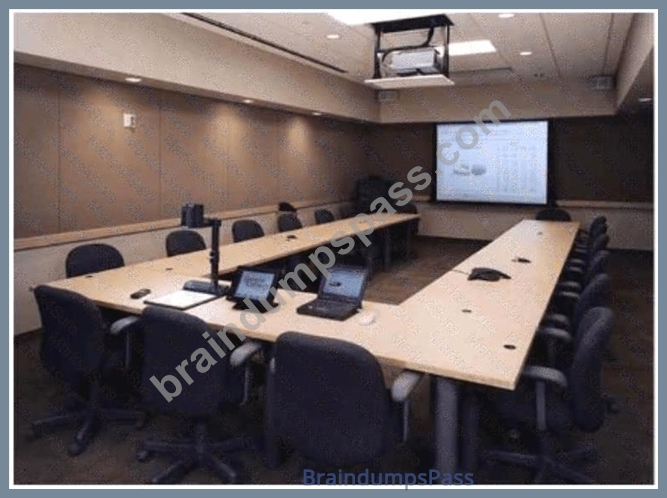
- A. length of cable runs
- B. combination of fluorescent and Incandescent lighting
- C. ceiling clearance for the projector lift
- D. room orientation
Answer: C
Explanation:
The primary concern for the sales representative during the site survey should be the ceiling clearance for the projector lift. Ensuring that there is sufficient space for the projector lift to operate without obstruction is crucial for proper installation and operation. Inadequate clearance can lead to difficulties in mounting and deploying the projector, potentially compromising the projection quality and system functionality.
Additionally, it is important to verify that the projector can be positioned at the correct height and angle to achieve the desired image size and alignment.
NEW QUESTION # 106
......
AVIXA CTS Exam Practice Test Questions: https://www.braindumpspass.com/AVIXA/CTS-practice-exam-dumps.html
Updated Certification Exam CTS Dumps - Practice Test Questions: https://drive.google.com/open?id=1SHqjEmppKy_MdEP_-wtA5eLd157Mu9EB